Over the holidays I spun up a fully functional prototype of a self-serve onboarding flow. Real figma designs from our team, built in v0.dev, start to finish in about eight hours.
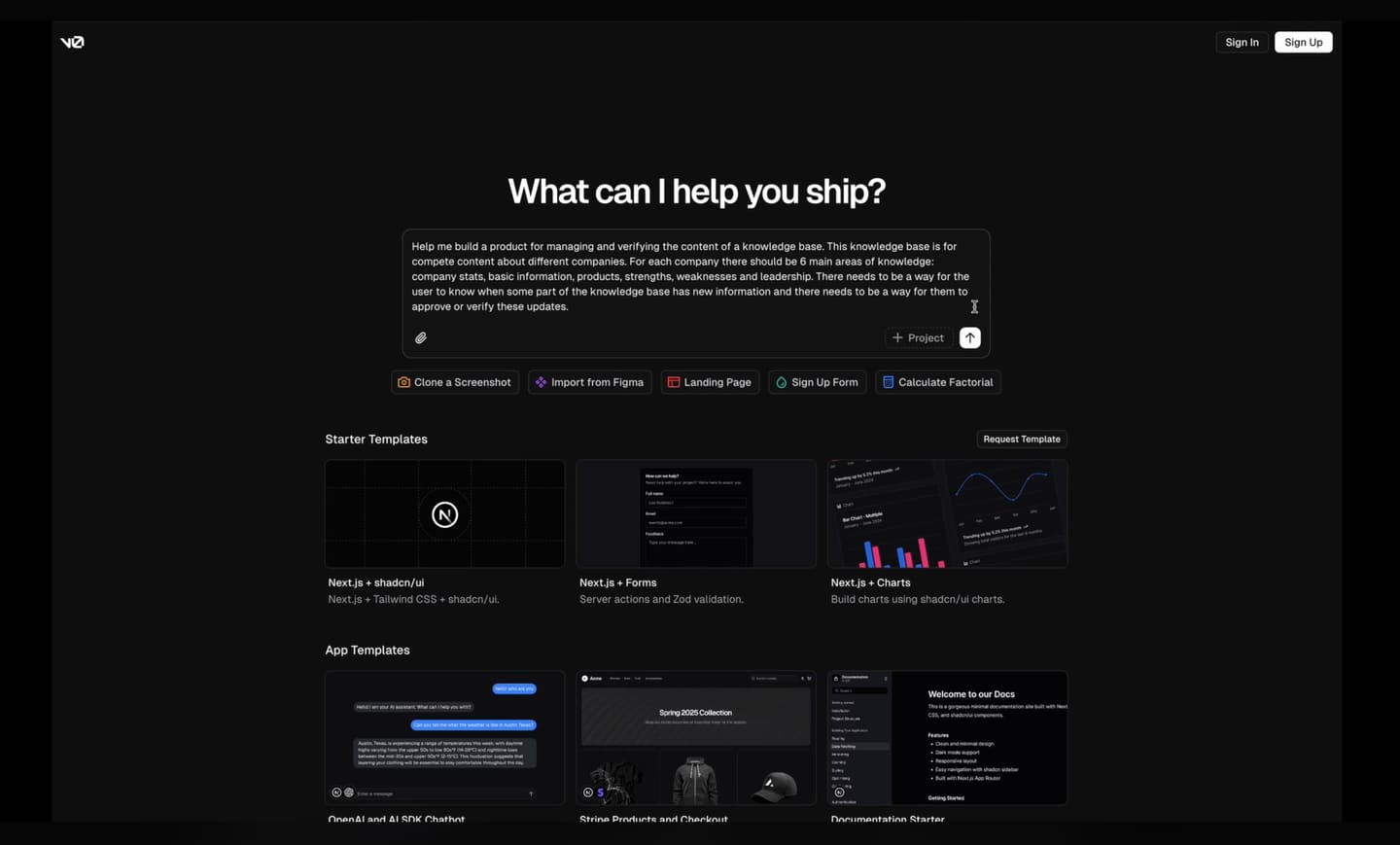
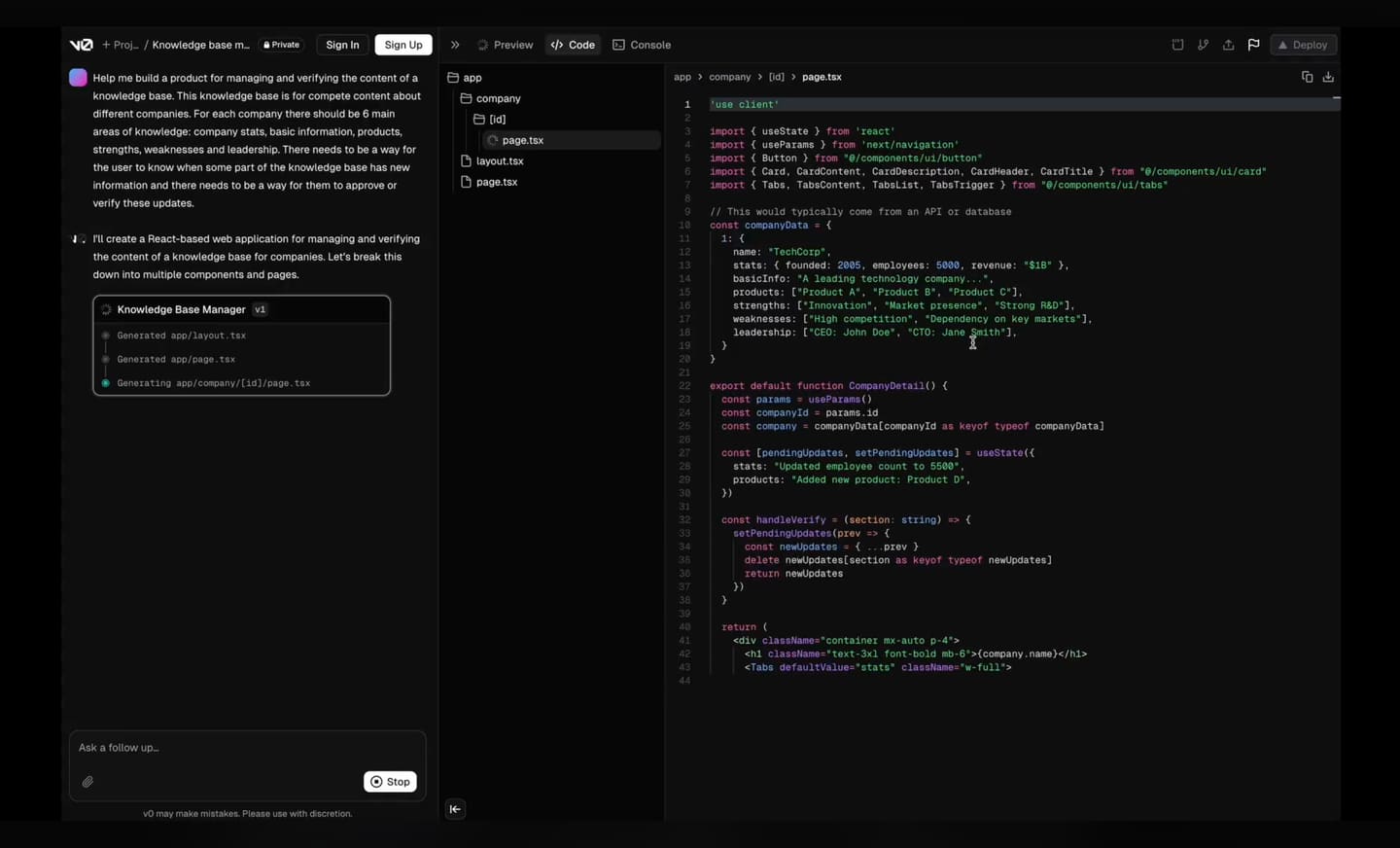
Eight hours! Six months ago that would be a two-week design-and-build cycle, minimum.
The prototype was pretty focused: Linkedin style onboarding for a b2b app, focused on getting users to value as quickly as possible. In our case, that meant a 95% reduction in onboarding time.
But the prototype isn't really the point. The speed + fidelity is.
It took a couple well crafted prompts, Figma reference files, and ~20 iterations to get to something I could have our team members and customers use live. That is nuts.
I've spent the past few days thinking about what this will unlock. Here's my POV:
-
Prototypes become the spec. We'll stop debating static Figma mocks and start reacting to something clickable. It's a lot easier to have a real opinion on a thing you can actually use.
-
The design-to-build gap closes. When a designer's work is a running app by the afternoon, the handoff stops being a handoff. Design and build blur into one motion, and the people (or PMs!) who can do both get dangerous.
-
We ship incomplete things faster — on purpose. Cheap prototypes mean we can test five ideas for the cost of one. Most will miss. That's fine. We learn in days, not quarters.
The knock on effects will also be interesting. When building gets this cheap, taste becomes the scarce thing. Anyone can generate ten prototypes in an afternoon. Knowing which one solves the right problem — that's the actual job now.
So my bet for 2025: the winning teams won't be the ones who can simply build the fastest. Lots of teams will get faster. The BEST teams will be those who ask the sharpest questions and kill their own bad ideas the quickest.
One thing is for sure: a lot is about to change.