Hearth
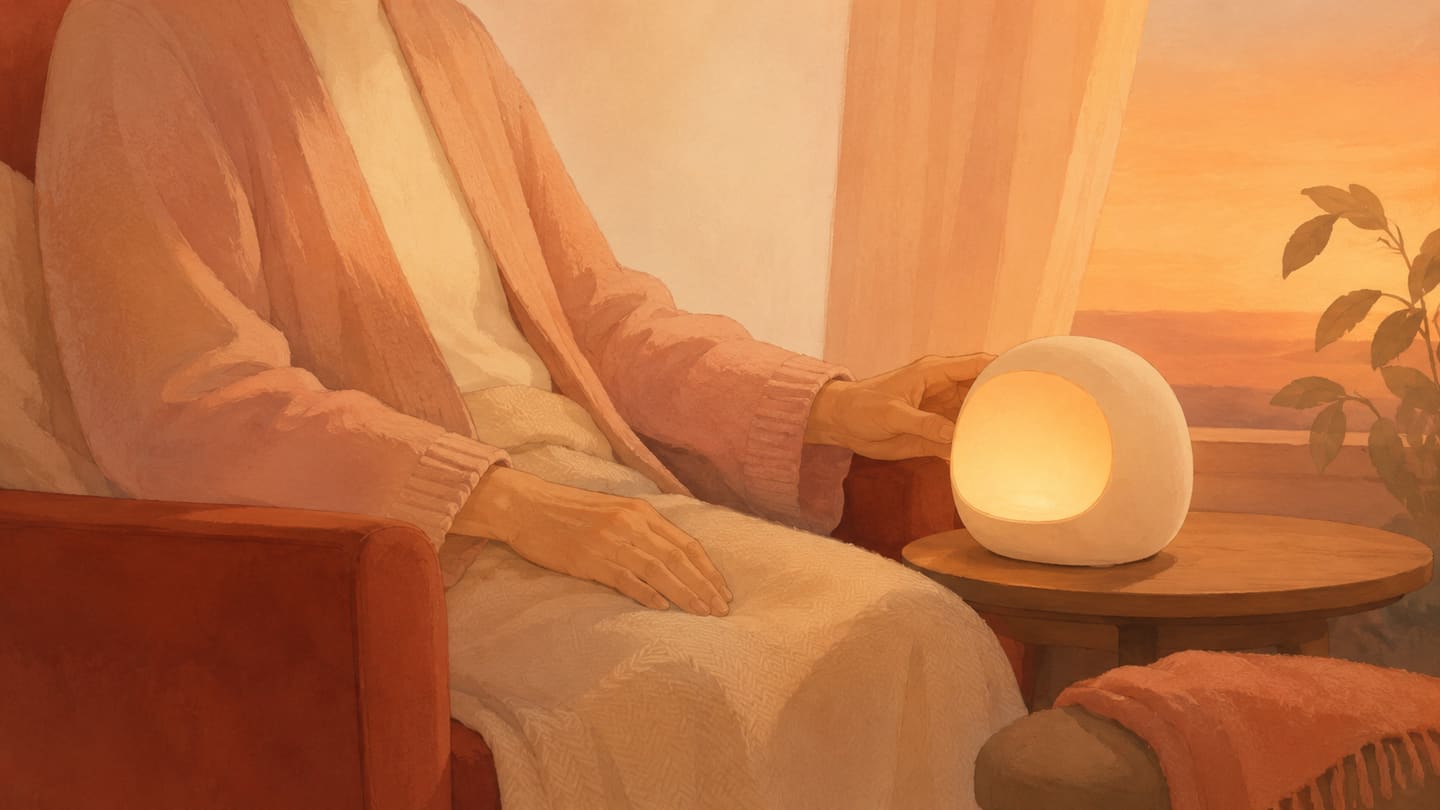
- Evenings-and-weekends project that uses 3D-printed pods and voice-first, memory-reinforcing AI conversation for isolated seniors.
- Piloting at an assisted living facility in York Region, in partnership with one of the province's largest providers.
- Built for a real epidemic: 57% of Canadian seniors report loneliness, and chronic isolation raises dementia risk in older adults by roughly 50%.
- A bet that AI can do real good today.
57% of Canadian seniors report feeling lonely in the past year. In the US, the Surgeon General has called loneliness an epidemic, one that raises an older adult's risk of dementia by ~50%. Very few people are focused on that problem.
Meanwhile, advancements in AI have largely accrued in tech, coding and b2b applications. But there's a lot of good this tech can do if properly applied.
Hearth is what I've been spending evenings and weekends on: 3D-printed companion pods paired with a voice-first interface, running an LLM built for one job: conversation and memory-reinforcement for isolated seniors. We're running our first pilot now, inside a facility in York Region, in partnership with one of Ontario's larger assisted living providers.
The problem, in numbers
About one in four older adults experience social isolation. By 65, >80% of seniors living alone are divorced or widowed, the highest-risk group for both loneliness and what it does to you. In the US alone, social isolation among older adults adds an estimated $6.7B a year in excess Medicare spending, and chronic loneliness is linked to a roughly 50% higher risk of dementia.
None of that is abstract to the person living it. It's a resident eating dinner alone because their spouse passed, or someone who used to call their sister every night and now has no one on the other end.
What I'm building
The hardware is a small, warm, 3D-printed pod, deliberately not clinical-looking, paired with a voice interface. Residents talk to it the way they'd talk to a person: about their day, their family, things they remember. The software is an LLM tuned for exactly that, with memory built in - it remembers what someone told it last week and brings it back gently, the way a good friend would.
This is AI aimed at a painful real life problem, not another coding optimization tool. The goal is to prove that the type of natural language technology, when properly deployed, can have a positive mental health impact.
The pilot
I partnered with one of Ontario's larger assisted living providers to run the first pilot inside a facility in York Region. Early days - still learning what residents actually want from these conversations, and how staff want to use it alongside their own care. But it's real people, in a real facility, talking to something that remembers them.
More soon.