CleanSlate UV
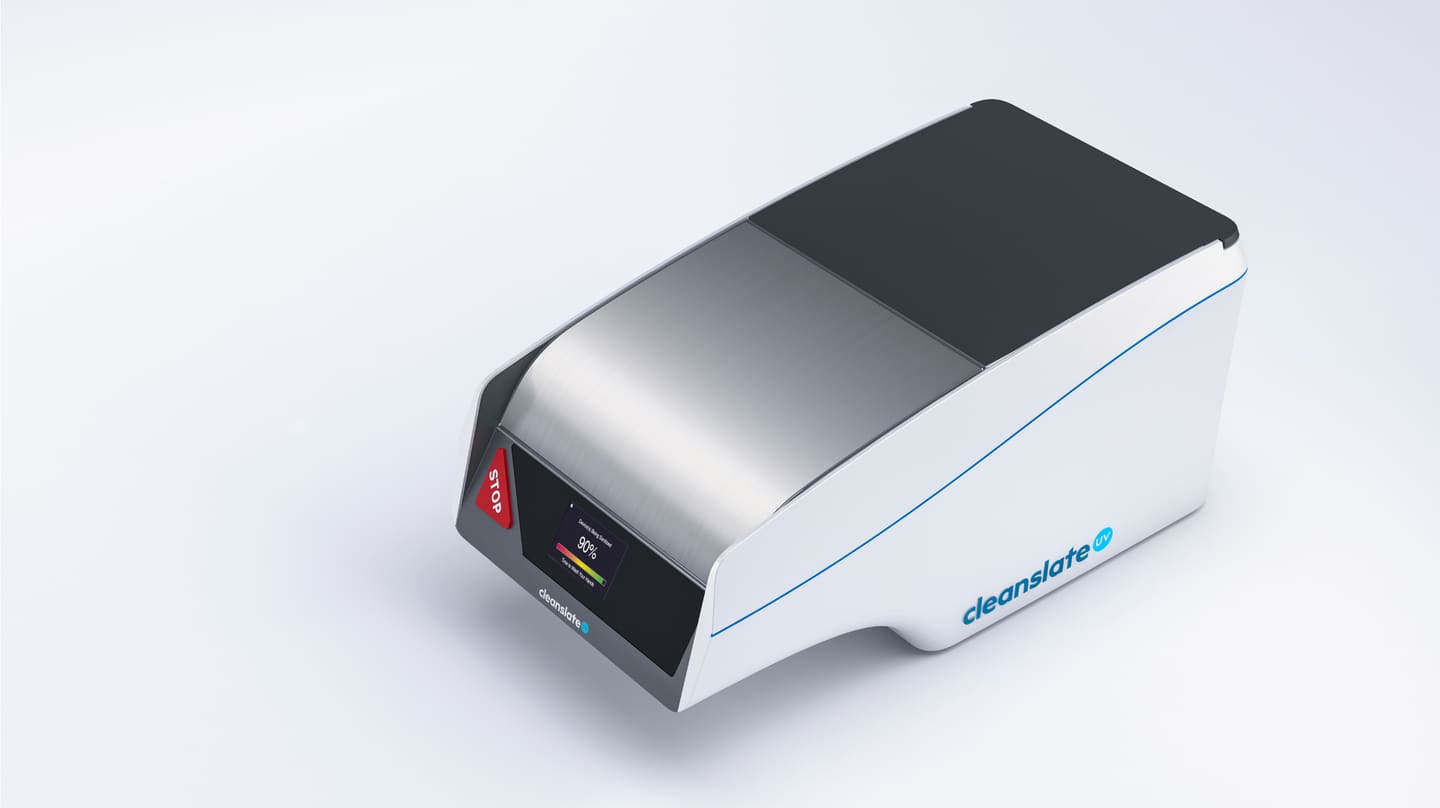
- Co-founded CleanSlate UV in 2014 and exited in 2022
- Scaled from a Queen's summer accelerator to a UV-C sanitizer & software suite used in 350+ hospital systems across 14 countries.
- Raised $15M+ across five rounds and scaled revenue from $3M to $22M during COVID-driven surge.
- Built two hardware gens + CleanCloud (software layer for compliance tracking).
- Acquired by SealShield. Now a part of their IC portfolio.
I've always been a bit of a germaphobe. In 2014, deep in a summer accelerator at Queen's, I kept hearing the same thing from nurses: everyone scrubs their hands, then picks their phone back up. Mobile devices had become clinical tools nobody was cleaning.
Eight years later we'd sanitized 110 million phones and tablets, raised $15M+, and handed the company to its next owner. This side of the story is the company: the money, the people, the pitch.
Why this problem, specifically
Hardware and bioscience don't ship-and-fix overnight - you need the evidence right before anything goes out the door. We got to market in half the time our competitors took by being ruthless about what actually mattered.
Raising the money
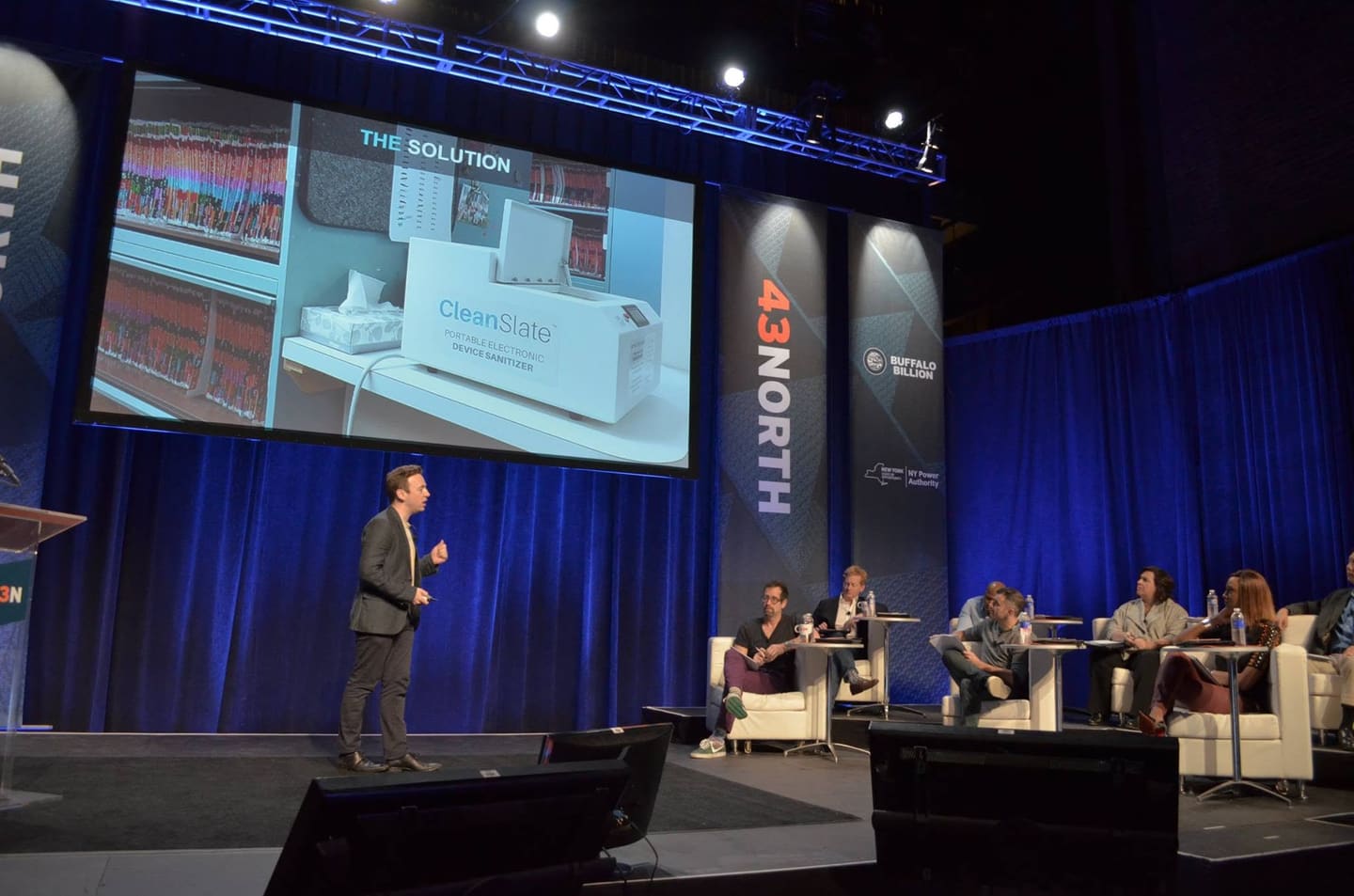
We raised $15M+ USD all in across pre-seed, seed and Series A, including a pitch on the 43North stage in Buffalo - how CleanSlate ended up with offices in both Toronto and Buffalo.
Counterintuitively, seed was the hardest round. By Series A we had real demand and a patent filed. At seed it was just a thesis and a metal box.
Landing the first hospital, then everyone next to it
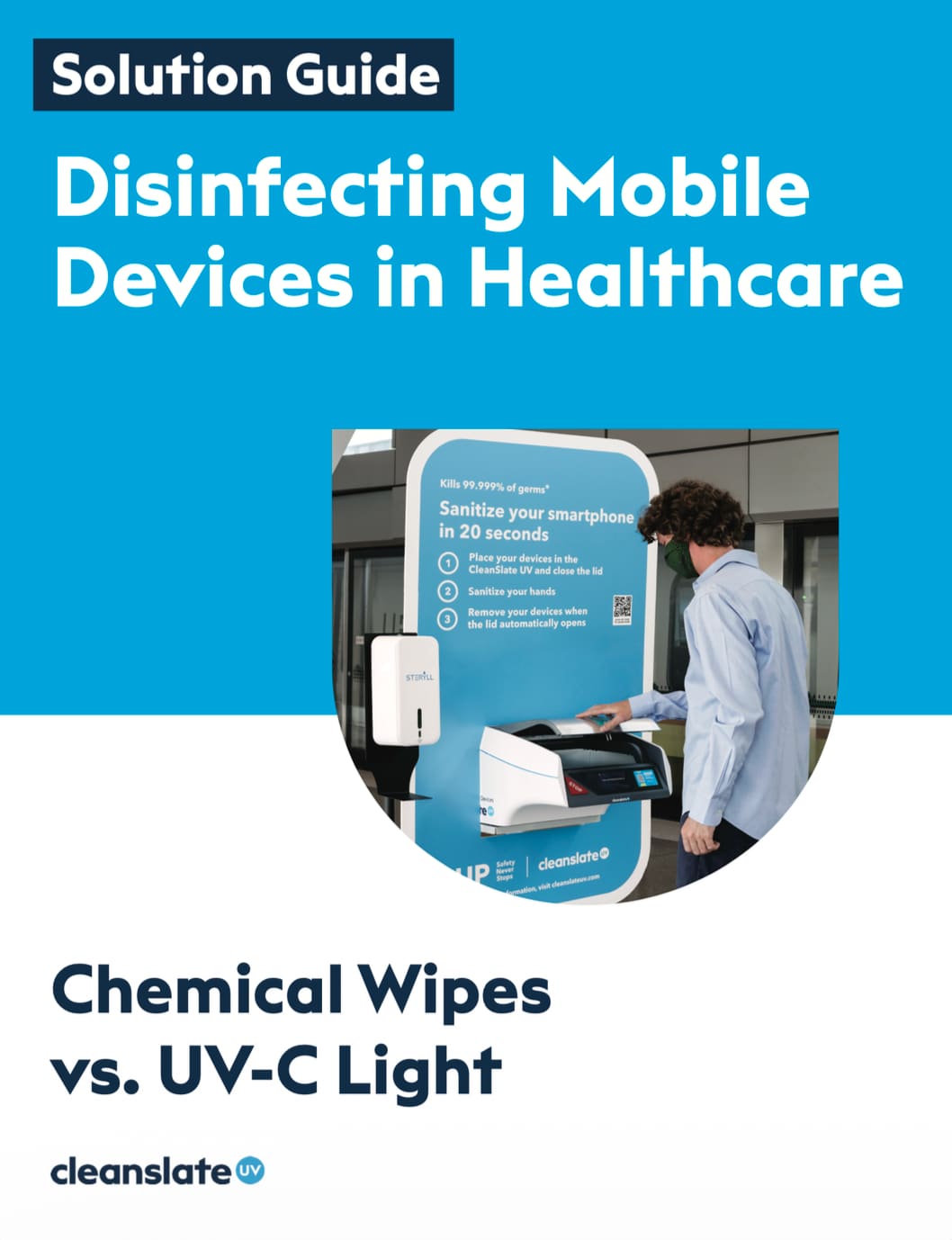
Our first hospital system came through a warm intro, closed with real answers instead of a pitch deck full of hope. The playbook from there: land a beachhead system and distributor, then use it to pull in the accounts next door.
International expansion was harder - not the product, but the regulatory approval, and convincing foreign partners we could navigate it before we'd proven it.
Scaling the company through COVID
The team peaked at 45 people, grown from just me to a product team I got to mentor.
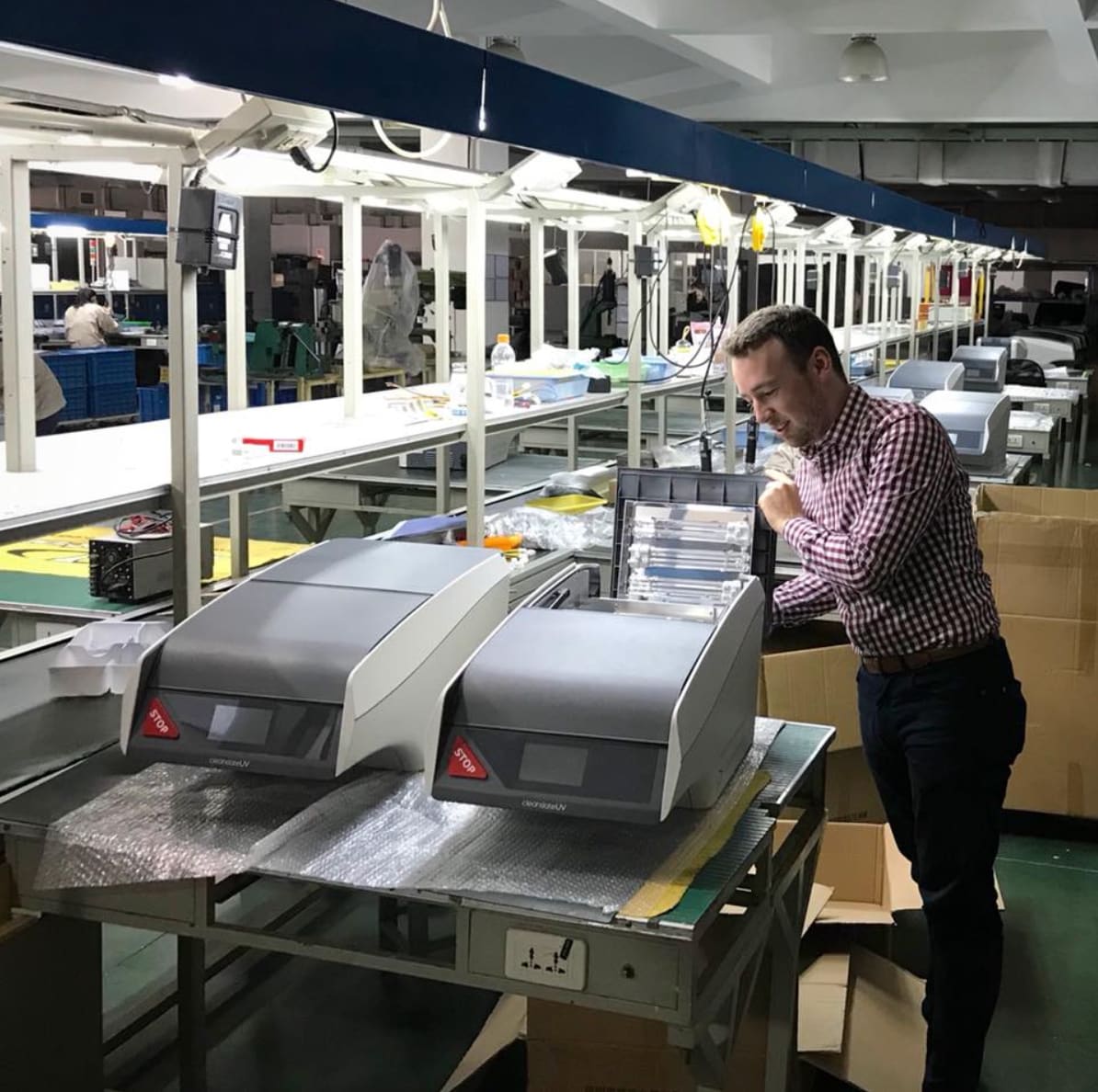
COVID took revenue from $3M to $15M in a single quarter. We scaled manufacturing into 14 countries mid-pandemic by empowering the team to make calls without me in the room.
At peak, CleanSlate UV was doing $22M in annual revenue, with good margins and years of consumable revenue behind every unit.
Handing it off
CleanSlate found its next home at SealShield, a Florida infection control company, not long after the COVID surge. I stepped back around the same time - my wife and I were starting a family, and I wanted an individual-contributor stretch. I think of it now as the IC chapter of my own arc.
Three decisions that mattered most
- Good: who we hired early. Hardworking, sharp, and people I trusted completely.
- Bad: hiring for experience over fit in a senior role. It cost us more in culture than it gained us in results.
- Good: staying close to the product, not just the pitch. User experience was our best sales asset and it honed my product sense.
The other lesson, learned the expensive way: after the Series A I stepped back from staying close to revenue and sales, assuming steady leadership was already in place. Mistake - paying customers give the clearest signal on product-market fit, clearer than anything said in a meeting.
Where the company landed
We raised $15M+, grew to 45 people, and built a company that hospitals and airports actually trusted. Startups are hard, very hard - but this was one of the most fulfilling things I've built.
Onwards and upwards.
Same eight years, this side focused on what we built: the hardware, the software, the design decisions behind both.
From metal box to product line
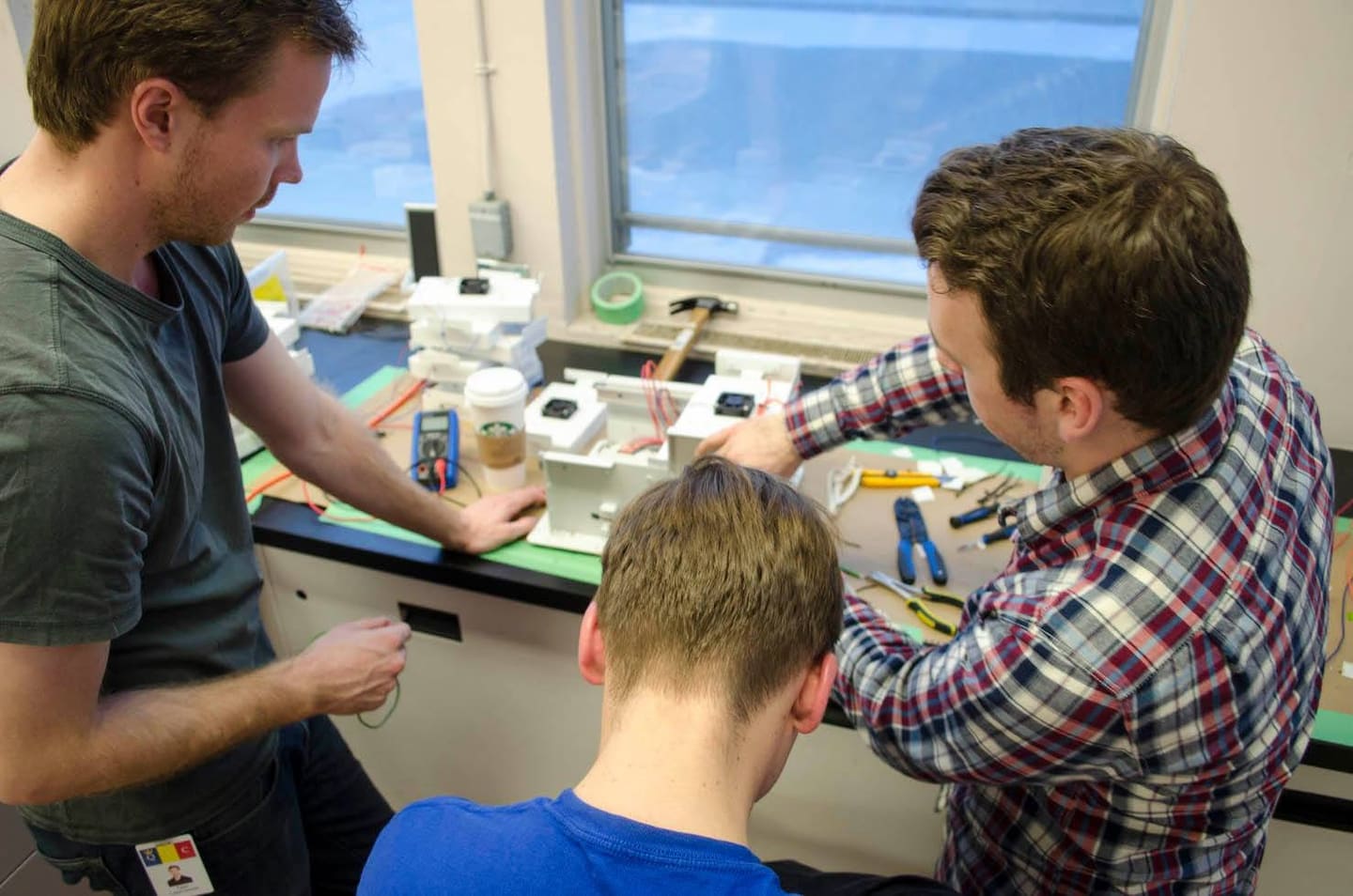
V1 was unglamorous: a metal box with UV lights, built to be testable and patentable. Not pretty, but it worked.
We developed two hardware products, plus a software layer that solved what customers complained about most: no idea how often devices were getting disinfected.
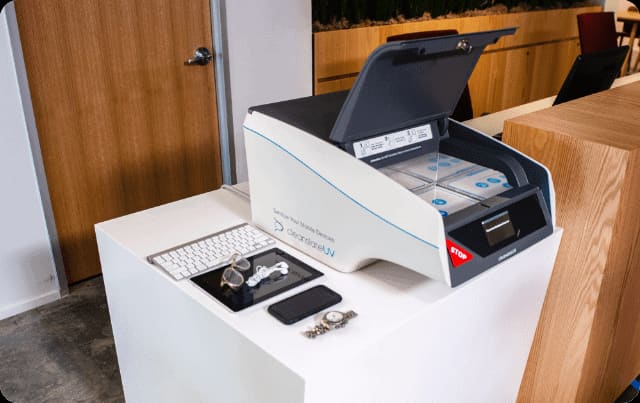
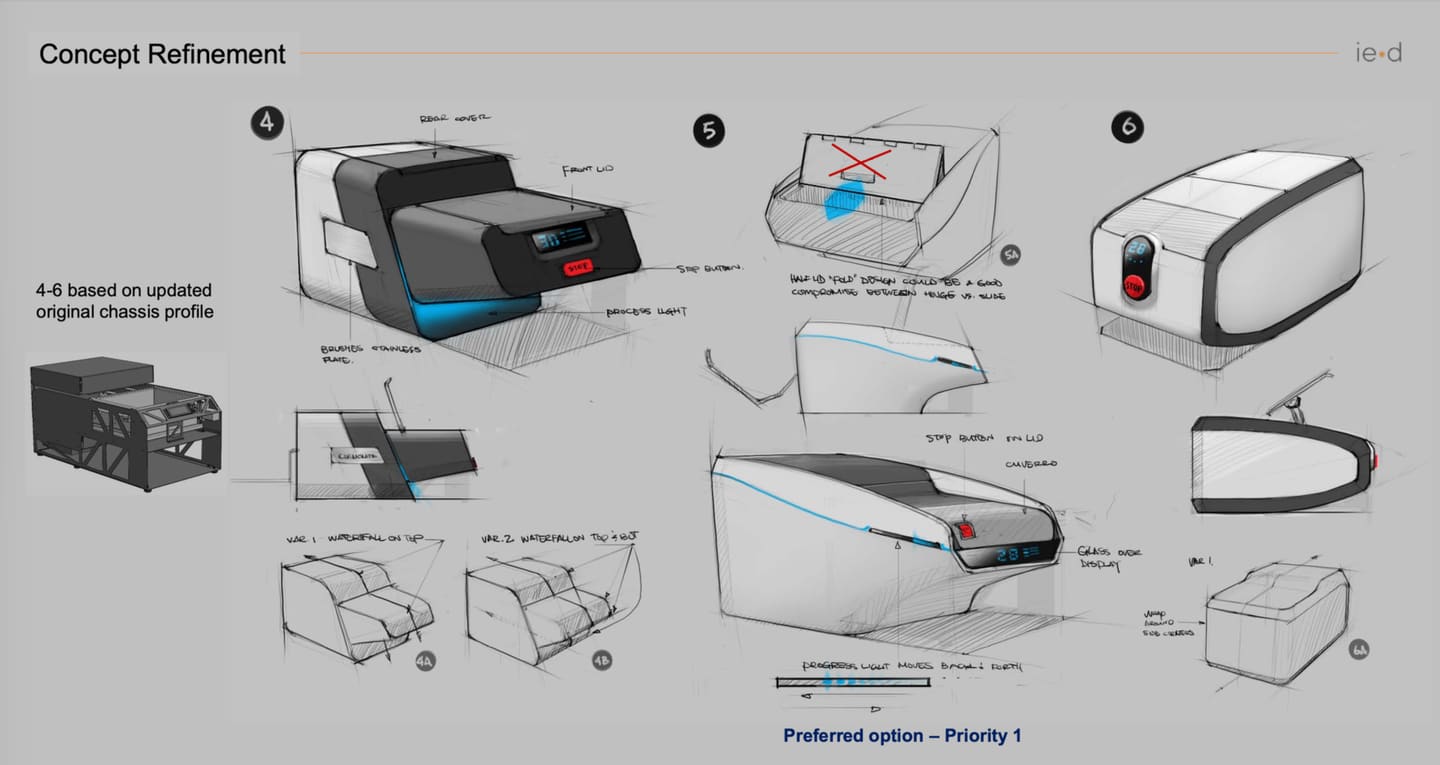
Every hardware revision went through countless iterations and user tests. Chassis options sketched and scored against each other, in person feedback with nurses, etc.
CleanCloud: the software layer
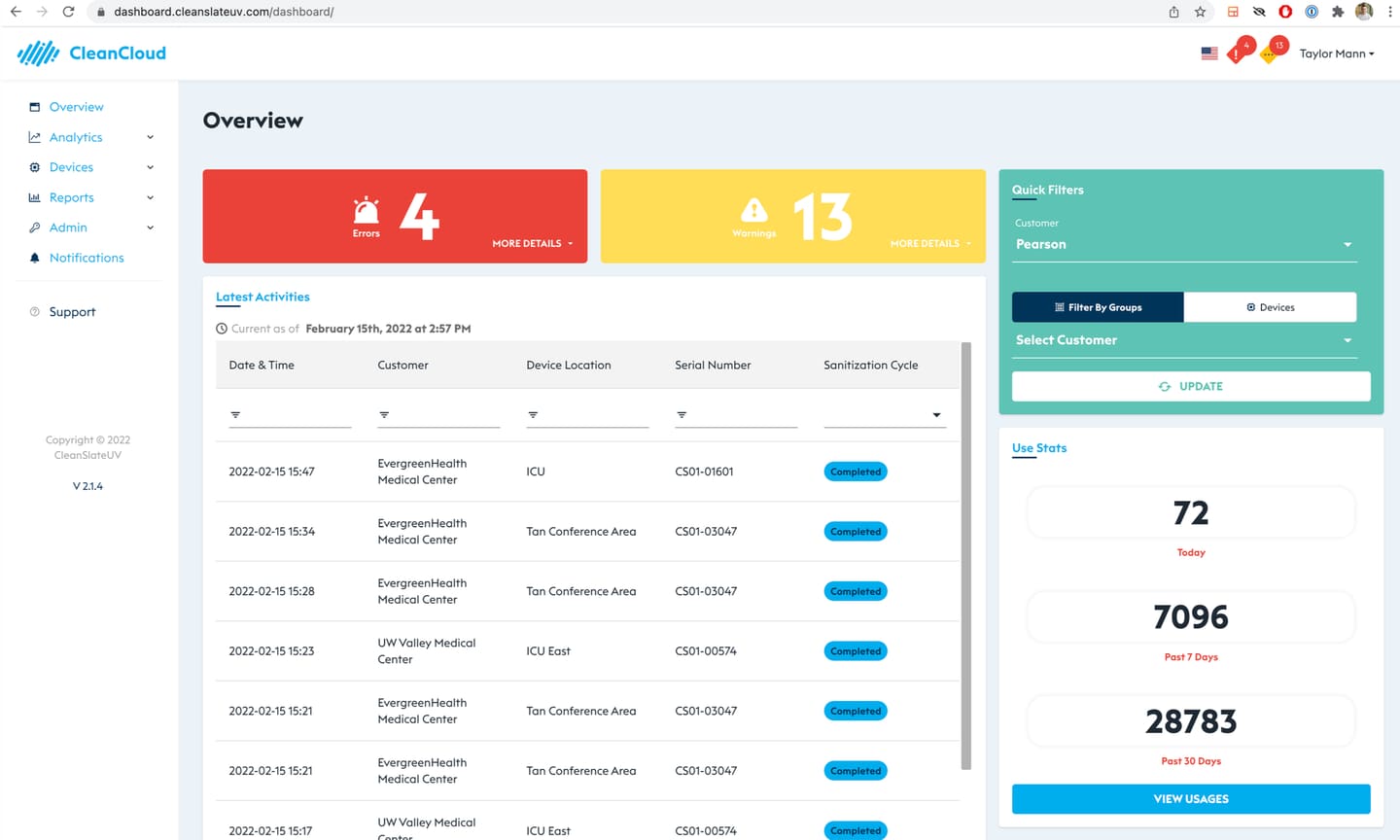
CleanCloud, the dashboard we built, gave facilities real-time visibility into every disinfection cycle: errors and warnings up front, a live log by customer and device, rolling usage stats. It turned "we sanitize devices" into something a hospital could actually audit.
The device, in the field
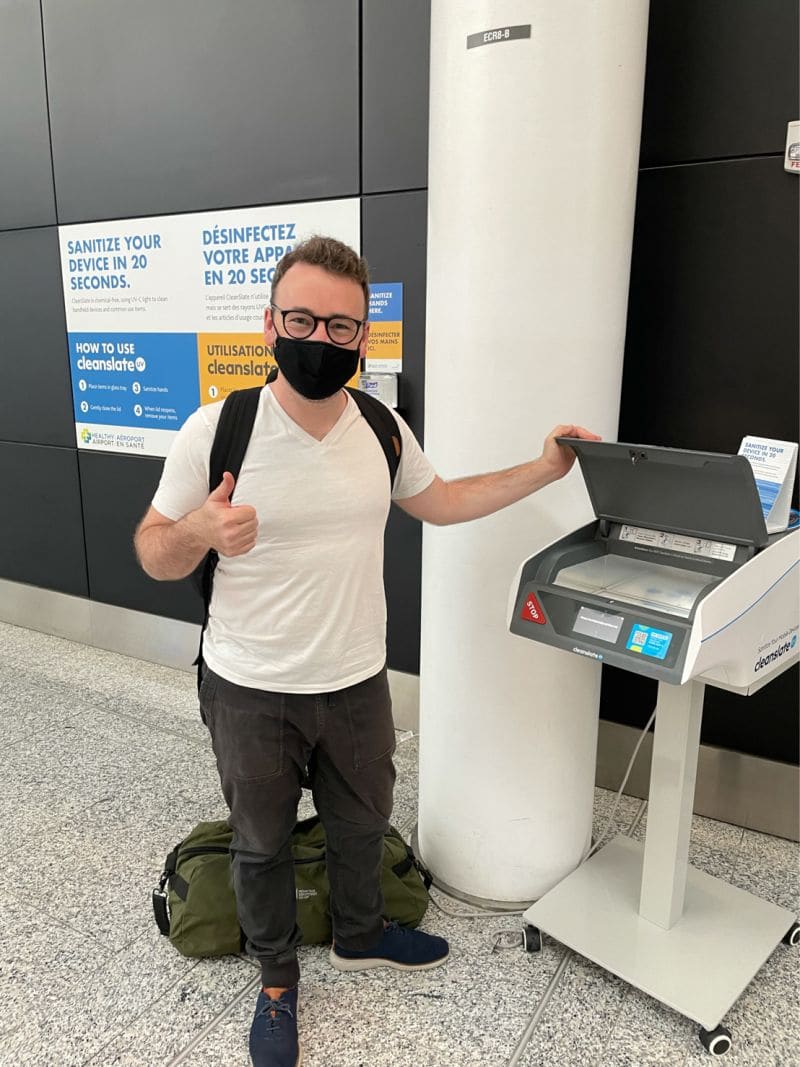
Airports turned out to be one of the best environments for the product: high foot traffic, a captive audience mid-travel, and a genuine want for a fast, chemical-free way to sanitize a phone before a flight.
Where the product landed
CleanSlate UV sanitized over 110 million phones and tablets, served 350+ hospital systems, and shipped into 14 countries at its peak. Tens of thousands of people were made safer every day by something that started as a metal box built by a germaphobe at a summer accelerator.